Showing posts with label 1979. Show all posts

Wednesday, August 23, 2017

Moonraker

After a shuttle is spacejacked, 007 travels to a billionaire's (Michael Lonsdale) Californian compound and then the far reaches of space while, with a the help of a sensual CIA agent (Lois Chiles) posing as a research scientist, uncovering a genocidal plot to wipe out the world's population and start anew with only the most beautiful members of each of race. After a series peak with The Spy Who Loved Me, the Bond series returned with this curious piece of cheese and obvious Star Wars ripoff that approaches so bad its good territory. Lonsdale makes an adequate villain and Richard Kiel's return as Jaws is much welcomed.
** out of ****

Tuesday, June 6, 2017

The Great Santini

A decorated Marine fighter pilot (Robert Duvall) commands his family and his oldest son (Michael O'Keefe) in particular with the same fierceness and determination he does his own troops as they adjust to life following their latest move to a Southern military town. Lewis John Carlino trims the fat of Pat Conroy's bloated and overwritten autobiographical novel and winds up with a too sanitized but nonetheless likable look at a dysfunctional father/son relationship. Duvall's ardent and comical role is up there with his best and O'Keefe contributes a surprisingly strong youth performance.
*** out of ****

Monday, March 6, 2017

Vengeance Is Mine

Drawn from a true crime case out of Japan, a serial killer is brought in after a months-long manhunt which is recounted (with no help from the collected sociopath) in detail, including the brutal murders, con games spent fleecing mothers of criminals of their bail money, and a relationship with a brothel owner which may or may not show feeling but has only one inevitable destination. Shôhei Imamura's unique, disjointed procedural is cold, lengthy, and ultimately mostly unavailing.
*** out of ****

Saturday, October 22, 2016

Nosferatu the Vampyre

This remake of Murnau's 1922 silent Bram Stoker adaptation tells the familiar, traditional Dracula story, while getting off to a surprisingly conventional start for a Werner Herzog flick before inevitably arriving at the jarring, unforgettable imagery. The film is stark, eerie, though not without a sense of humor and features a perfectly emotive, extraordinarily creepy (and surprisingly subdued) Klaus Kinski in the title role. Bruno Ganz is strong as the anemic Harker and Isabelle Adjani makes for a strong heroine, portraying Ganz's wife and Kinski's would be prey.
*** 1/2 out of ****

Thursday, September 29, 2016

Tinker Tailor Soldier Spy

After an undercover Czech mission goes terribly wrong and a longstanding operative is tortured and killed, bureau chief George Smiley (Alec Guinness) is summoned from retirement to investigate a theory that a mole is present in the highest reaches of MI6. This John le Carre BBC miniseries is extremely measured, stagnant even, but worth watching for Guinness' impeccable performance.
** 1/2 out of ****

Thursday, September 15, 2016

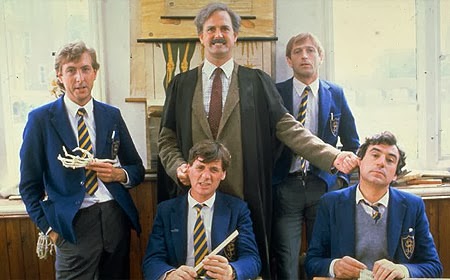
Flying Circus and the Python Films

It is difficult to describe the appeal of Monty Python, the irreverent and game changing British comedic troupe, when their irreverent material is as often inane and borderline unwatchable as it is uproarious. Nevertheless the appeal of the group, which consists of members John Cleese, Graham Chapman, Michael Palin, Terry Jones, Eric Idle, and Terry Gilliam and began on the stage and continued on through television and film, is undeniable and their influence on comedy is immeasurable. Here is a brief rundown of their work:

Flying Circus ran on the BBC between 1969 and 1974 with a feature film titled with the group's favorite segue And Now for Something Completely Different sandwiched midway in its run which took the odd approach of refilming some of their greatest hits without of the presence of a studio audience, the result of which is strangely compelling. The series has many regrettable sketches and running gags, and I feel I should keep my opinion on Gilliam's animations to myself in fear of being shunned, but it is absolutely worth suffering the dreck to get to their best and most outrageous routines (or you could just watch them on YouTube---my favorite bit is Palin's bumbling Spanish Inquisitor).

The gang followed up the series with Monty Python and the Holy Grail, perhaps the most widely seen of their features and what I'd personally consider the best of the lot. This silly take on the Arthurian legend has many indelibly hysterical moments and only starts to come apart at the seams towards the very end.

The controversy generated by Life of Brian, which tells the tale of the child born a manger over from Christ, catapulted the Pythons to international superstardom, but the film offers easy and obvious satire, with belabored gags, and laughs that are few and far between (though those few present are hearty). Gilliam's direction does achieve great period look (though his influence beyond that is distracting) and Palin's Pontius Pilate is unforgettable. Casting Chapman in the lead serves as a great disappointment considering what is lost in the supporting roles.

Time Bandits is not officially a Python movie but it was directed by Gilliam who cowrote the script with Palin and features cameos from both Palin and Cleese. The fantastical and occasionally creepy children's story deals with a band of dwarves in possession of a time travel map who take a neglected youth on their marauding journey through history. The film again falls apart towards the end but the actors are likable and the proceedings are worthwhile for the hilarious cameos, which also include Ralph Richardson and Sean Connery. 

Next up was Live at the Hollywood Bowl, a live show converted to film and released theatrically which consists of old sketches and new that comes off quite well leaving you pondering if their material isn't best suited for the stage. 

Meaning of Life, which takes a surreal look into each of life's stages, is a sporadically funny feature which is hurt by dark and atypically heavy dosages of cynicism and vulgarity. The short film that opens the movie is a highlight and the "Every Sperm is Sacred" number is priceless.

In 2014, the Pythons returned for a live farewell show of sorts, Monty Python Live (Mostly), which featured an array of live performances, clips old and new, and a musical revue, all with the participation of the remaining and surprisingly capable troupe members, save Graham Chapman who is roundly toasted during the performance.

Sunday, September 11, 2016

The Marriage of Maria Braun

With Allied bombs landing in every direction, an outwardly naive young woman (Hanna Schygulla) marries a serviceman who rushes off to the front and his presumed death just after exchanging their vows. While tirelessly trying to learn of his fate, she takes up with an American G.I. and begins to seduce a wealthy industrialist. The Marriage of Maria Braun, the first film in a Rainer Werner Fassbinder trilogy showcasing women in postwar German settings, is brazen and offbeat, brilliantly directed and unpredictable, even if it lulls in the middle before its shocking, extraordinary ending.
**** out of ****

Monday, August 1, 2016

Woyzeck

A low level German soldier (Klaus Kinski) begins to lose his grip on reality after subjecting himself to bizarre scientific experiments, and flies off the handle after learning his sweetheart (Eva Mattes) has taken another lover. Shot jut a week after filming wrapped on Nosferatu, and on the same locations with the same crew in just over half a month's time, Woyzeck feels rushed and a little stagy but is worth seeing for another crazed Kinski performance and a haunting, gracefully shot killing sequence towards the conclusion.
*** out of ****

Wednesday, March 30, 2016

Norma Rae

A poor, provincial single mother (Sally Field) laboring in poor work conditions alongside her father in a Southern textile mill acquaints rabble rousing New Yorker (Ron Liebman) sent by the union and gradually becomes involved in the cause. Norma Rae is an impeccably filmed, late career outing from versatile, socially conscious director Martin Ritt (Sounder, Hud, The Spy who Came in From the Cold) and a showcase for Field although the picture is anticlimactic, doesn't really have a conclusion, and leaves several things open. Liebman is obnoxious and given to preaching (both of which are called for however) and Beau Bridges, playing Field's affectionate coworker, has a thankless, and underdeveloped role. Despite its flaws, it is still a pleasure to see a work of such care and craft that feels largely absent from today's productions.
*** out of ****

Thursday, January 7, 2016

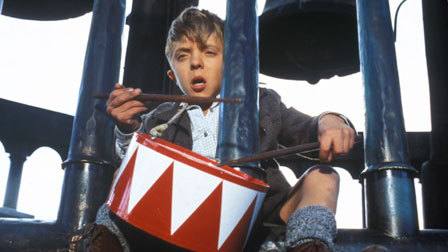
The Tin Drum

A three year old boy witnesses the state of moral degradation and senses what is to follow on the eve of the Nazi takeover in 1930s Germany and hurls himself down the cellar stairs, thus stunting his growth and perpetuating his unchanging childish traits. As he lives through the horrors to come, he protests by banging his toy drum and unleashing shrieks of glass shattering proportions. From Gunter Grass' acclaimed book, The Tin Drum is a crude, hard to stomach allegory featuring David Bennett as an insufferable child actor although the proceedings are sparked by exciting direction from Volker Schlondorff.
** 1/2 out of ****

Saturday, September 26, 2015

Star Trek: The Motion Picture

Captain Kirk (William Shatner) and Dr. Spock (Leonard Nimoy) return to their posts on the Starship Enterprise when a formidable and mysterious alien life force wreaks havoc on a neighboring planet. Star Trek: The Motion Picture, the long gestating adaptation of the popular Gene Rodenberry series, is a somnolent, murky affair that loses a lot of the campy fun and appeal of the original, and features a welcomed but tired, aged cast.
** out of ****

Tuesday, August 18, 2015

Hardcore

When the daughter of a staunchly religious midwestern businessman (George C. Scott) goes missing on a bus trip to California, it is quickly revealed by the aid of a shifty P.I. (Peter Boyle) that she has fallen in with a circle of pornographers, and the shattered father decides to take it in his own hands to find her. Paul Schrader's Hardcore features a powerful performance of melancholic rage from Scott but the movie is continually off-putting (as it should be) and certain elements of the picture seem to work against each other.
*** out of ****

Thursday, March 26, 2015

Manhattan

A television writer (Woody Allen) currently romancing a 17-year-old (Mariel Hemingway), frustrated with the inanity of his line of work, and whose ex-wife (Meryl Streep) left him for another woman, falls for his best friend's mistress (Diane Keaton). Allen's love letter to his city is humorous, deep, and distinctive, a film that lets you step outside yourself and into a another world, perhaps one that is miles away from your own, yet still containing characters with which you identify. It features Gordon Willis' beautiful black and white photography, and Allen's spectacular performance, something not commonly commented on in his movies, although his character's central relationship with a high school aged girl is disturbingly treated with levity or disregard.
*** 1/2 out of ****

Monday, March 10, 2014

The Adventures of Antoine Doinel

In 1959 Francois Truffaut, along with other members of the French New Wave, shook the world when he introduced the character of Antoine Doinel, a class clown quickly graduating to juvenile delinquency with disinterested parents and an affection for Balzac, in his masterful and intensely personal The 400 Blows. Played by Jean-Pierre Leaud, whose earnestness won over his director during the casting process, would return to the character with Truffaut five times over the course of twenty years in a series of films that turned away almost entirely from the inward emotiveness of the debut to a more lightly comic but still mostly masterful touch. 
As part of the 1962 anthology Love at TwentyAntoine and Colette was the first followup and shows Antoine surprisingly on his own as a young man and attempting to woo a young woman whose feelings aren't exactly reciprocated. The film is observant and an excellent example of short form storytelling.
After a six year hiatus, Truffaut and Leaud returned to Doinel with Stolen Kisses, a light, disarming, and insightful picture showing their hero discharged from the military, job hopping, and taking up with an ex-girlfriend.
1970 saw the release of Bed & Board which was a little more dense and mostly focused on the story's comic highs. Here, Doinel finds himself married with a child on the way but still manages to entangled himself in an affair with a Japanese client.
Love on the Run concluded the series five years before Truffaut's death in 1984, although he claimed it was the final installment. Its story shows Antoine's marriage still intact although he continues to seek extramarital company elsewhere. The film imposes a flashback structure composed of clips from the other films which doesn't really work, but the new material is presented in the same vein as the others and is generally entertaining.

Monday, November 25, 2013

North Dallas Forty

The life of a battered, aging, half crippled, pill addled, alcoholic pro wide receiver (Nick Nolte) as the trials he faces on the field pale in comparisons to those off of it while playing for a decadent Dallas Cowboys resembling organization. From a Peter Gent novel, which he helped to adapt for the screen, Ted Kotcheff's North Dallas Forty is a no holds barred look at the world of professional football, a film defined by its stark realism that ruffled some feathers in its time, and one which still resonates in today's world of seemingly nonstop athletic hooliganism. Nolte is spectacular in the lead and is given great support from Charles Durning as his hard nosed coach. The climactic game is a knockout as is the concluding gut-wrenching sequence.
*** 1/2 out of ****

Sunday, August 11, 2013

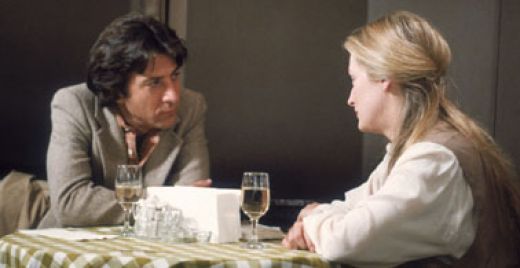
Kramer vs. Kramer

A bored and depressed housewife (Meryl Streep) leaves her struggling yuppie ad executive husband (Dustin Hoffman) to tend to their young son (Justin Henry), only to return a year and a half later seeking custody in a vicious courtroom battle. Robert Benton's Kramer vs. Kramer, a Best Picture winning adaptation of Avery Corman's novel, is a rich, gorgeously photographed film whose subject matter is occasionally contrived and which almost totally unravels in the phony courtroom sequences featuring absurd attorneys and scores of false sentiment. Hoffman and Streep aren't nearly as great as their Oscar trophies they received for this movie would indicate, but I did like work of Jane Alexander, excellent in playing their mutual friend. In the end I did enjoy several of the sequences and, again, the photography and direction are amazing but I'm not really sure why this is considered such a landmark film and for a better study of its subject I would recommend watching Noah Baumbach's The Squid and the Whale.

Monday, June 17, 2013

Apocalypse Now

While beginning to come apart at the seems in his hotel room in Saigon, an Army Captain (Martin Sheen) receives specific and top secret orders: travel up the Nung River into Cambodia and assassinate a respected Colonel (Marlon Brando) who has gone off the reservation and established himself as an idol of the local people. Apocalypse Now, Francis Ford Coppola's nightmarish vision of the Vietnam War, is a vivid and brooding look at a descent into madness. Working from Joseph Conrad's Heart of Darkness, Coppola along with screenwriter John Milius concoct a haunting episodic film featuring unprecedented photography from Vittorio Storaro, indelible performances from Sheen, Brando, and Robert Duvall (plus an outrageous one from Dennis Hopper as a drugged out photojournalist), and that is perhaps as grabbing and particular as any other ever made. On a side note, I watched the Redux version released in 2001 which features mostly unnecessary footage, including an interlude on a downed helicopter with several Playboy models and an extended scene at a French plantation. These additions make the film drag and I think you'd be better off viewing the film in its initial format.

Wednesday, March 20, 2013

Mad Max

In a forsaken, post-apocalyptic Australia, chaos reigns in the form of vile biker gangs who pillage and plunder the vapid wasteland. When a policeman's wife and infant child are brutally murdered, the officer (Mel Gibson) turns instantly cold and swears unyielding revenge on the Toecutter (Hugh Keays-Byrne, repulsively terrifying) and the rest of his loathsome cohorts. George Miller's "Mad Max" is a kinetic Outback western that made Gibson a star and features some of the most brilliant stunt work and chase sequences ever committed to film. The pulse pounding score by Brian May (not of Queen, as I initially assumed) is also a particular standout.
*** 1/2 out of ****

Sunday, March 17, 2013

Breaking Away

In Bloomington, a group of local teenagers, or Cutters as they're not so affectionately referred to as by students of the nearby University of Indiana, goof around and struggle with their dim prospects. One of their members (Dennis Christopher), who's obsessed with Italy's top cycling team and Italian culture in general, begins romancing a cute college student while gearing his buddies to participate in the cycling championship, in the first year that Cutters will be allowed to participate. Peter Yates' "Breaking Away" is a charming, endearing, and good-spirited movie which features fine early performances from Dennis Quaid, Daniel Stern, Jackie Earle Haley, and Christopher and two extraordinary racing sequences (Yates also helmed "Bullitt" which contains what is largely considered the the greatest chase sequence) which place this among the finest sports movies ever crafted.

Friday, June 8, 2012

Alien

On the way home from their latest expedition, the worn and weary crew of the space cruiser Nostromo is sent to investigate a distress signal on a neighboring planet. There a foreign creature attaches itself to a crew member's countenance, who is then brought back to the ship's operating room. A severe breach of protocol done explicitly against the orders of crew member Ripley. Soon, the creature has planted its in and imploded through its host chest, and begins to wreak havoc on the team. But, even more frightening than the implication of this unrelenting and indestructible being is the notion that it may have been working with cohoots with someone on the ship. With the release of "Prometheus", a film director Ridley Scott has said inhabits the same world as "Alien", I decided to revisit that 1979 masterwork, a film which I had regards for but certainly did not hold in esteem with my favorite and most chilling horror films. Watching this brooding, claustrophic, and terrifying film over, I realized how mistaken I was in not initially recognizing the brilliance in what Scott had created. "Alien" is a multifaceted champion, containing excellent direction, eerie sound effects, and impressive, believeable, and real special effects. It contains an impressive cast of character actors (John Hurt, Ian Holm, Harry Dean Stanton, Tom Skerritt) with Sigourney Weaver delivering her iconic role and bringing believeability to that rugged and resilient character. "Alien" is, for better or worse, one of the most influential works of its kind  whose reputation has been cheapened through mostly unworthy sequels ("Aliens" is excellent) and the schlock which it has inspired. Watching it again, nothing can diminish its harrowing effect and if this was ever rereleased theatrically I would jump at the chance to see it on the big screen with my hands clenched in the dark.